
Sport-Specific Betting Strategies: NFL, NBA, MLB, and More
 Available in US
Sport-Specific Strategies: Why Each Sport Demands a Different Approach
Betting every sport the same way is like using the same club for every golf shot. Sure, you can hit a driver off the tee and out of the sand trap, but you’re making things unnecessarily difficult and your results will suffer. Each major sport has unique characteristics that affect how lines are set, where value emerges, and which strategies actually work. What crushes in NFL betting might be terrible for MLB. What works in NBA could be suicide in NHL.
Most bettors figure this out the expensive way. They develop a solid approach for football, start winning consistently, then assume they can apply the same methods to basketball and baseball. Six months later they’re wondering why their NFL profits got eaten by NBA and MLB losses. The handicapping skills transfer somewhat, but the strategic approach needs to be sport-specific or you’re fighting against the fundamental nature of each game.
The differences aren’t subtle. Football revolves around key numbers and situational spots. Basketball is dominated by rest, pace, and late-season tanking dynamics. Baseball is pitcher-dependent with massive sample sizes that smooth variance. Soccer has three-way markets and draw probabilities. Tennis is pure individual matchup with surface specialization. Each sport requires its own strategic framework, and trying to force a universal approach is how winning bettors in one sport become losing bettors when they expand.
This guide breaks down sport-specific strategies for the major betting markets. We’ll cover what actually matters in each sport, what most bettors get wrong, where the value typically hides, and how to avoid the traps that each sport sets for inexperienced bettors. The goal isn’t to make you an expert in every sport that takes years of focused effort. The goal is to show you what’s different about each market so you can either specialize appropriately or avoid the mistakes that come from treating different sports identically.
If you’re currently betting multiple sports with the same approach, you’re probably leaving massive amounts of money on the table or actively losing in sports where you’d be profitable with proper strategy adjustments. Understanding sport-specific dynamics won’t make you a better handicapper overnight, but it will stop you from sabotaging yourself by applying the wrong framework to each market.
NFL Betting Strategy
NFL betting is the most popular market in American sports betting, which makes it both the most efficient and the hardest to beat. Every sharp bettor, every model, every analytics team focuses on the NFL. The closing lines are incredibly accurate. Finding edges requires either information advantages or exploiting the specific dynamics that make NFL different from other sports.
Key numbers dominate NFL betting in a way that doesn’t exist elsewhere. Three, seven, and ten are the most common margins of victory by far. Getting the better side of these numbers is worth more than half-point line moves in any other sport. When you can get Steelers +2.5 instead of +2, you’re just getting a slightly better number. When you can get Steelers +3 instead of +2.5, you’re crossing the most important key number in football. That half-point is worth paying for or shopping aggressively to find.
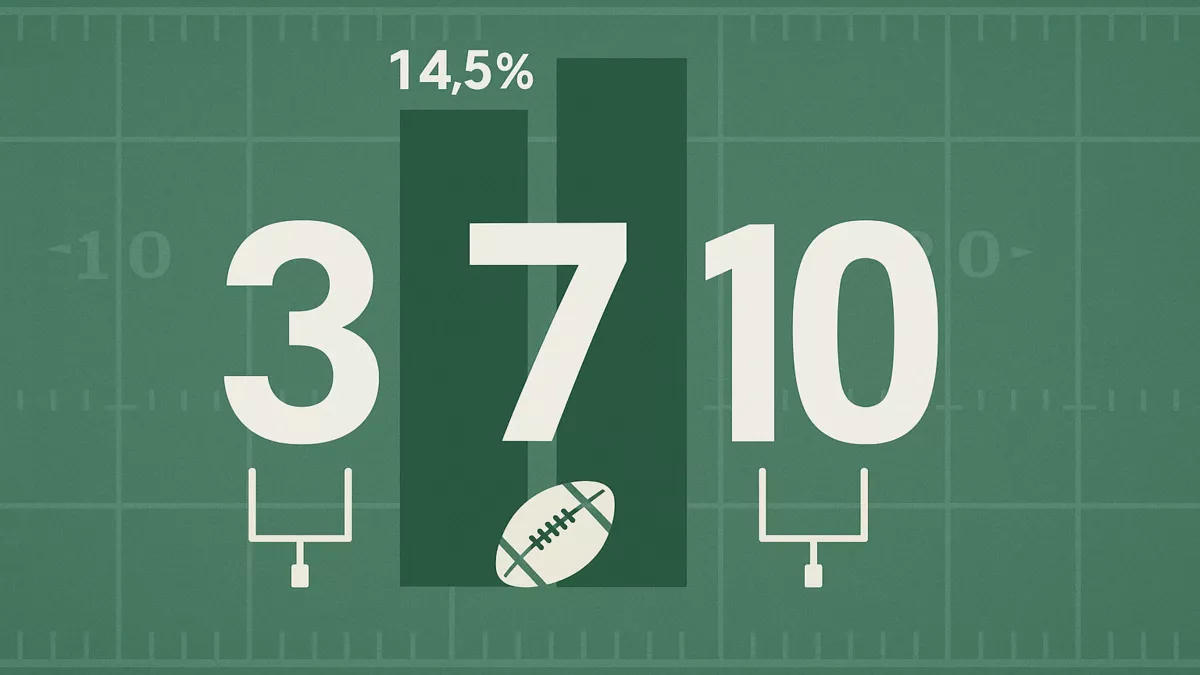
Key numbers 3, 7, and 10 are critical for NFL betting strategy
The practical application is that you should always buy through three and seven when the cost is reasonable. Buying Steelers from +2.5 to +3 at the cost of moving from -110 to -130 is usually worth it. You’re paying 20 cents of juice to get a number that hits significantly more often than the gap between 2.5 and 3 would suggest. Conversely, buying from +3.5 to +4 is usually not worth it because four isn’t a key number. Save your juice for the numbers that actually matter.
Situational spots create the most exploitable edges in NFL betting. Division games behave differently than non-division games home dogs in division matchups cover at higher rates than their records would suggest. Teams coming off short rest (Thursday games, Monday night into the next Sunday) show measurable performance declines. Primetime games, especially Sunday Night Football and Monday Night Football, often see inflated lines on popular teams because of public betting pressure.
Weather matters more in NFL than most bettors realize, but not always in the ways they think. Rain doesn’t affect scoring as much as people assume modern footballs shed water reasonably well and teams adjust their game plans. Wind over 20 mph crushes passing games and makes unders more valuable. Cold weather actually doesn’t correlate strongly with unders despite popular belief. Snow games are chaotic and unpredictable, which often creates value on underdogs because the public overreacts to weather making favorites less reliable.
Line movement tells you critical information in NFL betting. When a line moves against the public say 70% of bets are on the Cowboys but the line moves from -6 to -5.5 that’s reverse line movement indicating sharp money on the opponent. Following these reverse line movements is a viable strategy, though you need access to public betting percentage data and you have to act quickly before the information is fully priced in.
Coaching and quarterback matchups are overvalued by the public and properly valued by sharp bettors. When a star quarterback faces a backup, the public hammers the star and inflates the line. But NFL is more about the overall team than any individual, and backups playing at home with good coaching often keep games closer than the public expects. Fading public overreaction to quarterback news is consistently profitable if you can stomach betting against popular narratives.
The NFL regular season sample size is tiny 17 games. This creates massive variance that makes teams look much better or worse than they actually are. A three-game losing streak might just be variance for a genuinely good team. A four-game winning streak might be unsustainable for a mediocre team that caught breaks. Sharp bettors look past recent results and focus on underlying metrics that predict future performance better than win-loss records do.
Playoff betting is its own animal. Coaching matters more. Experience matters more. Home field advantage increases. Public betting becomes even more concentrated on popular teams. The best strategy in playoffs is often fading public darlings and taking points with quality underdogs that the market undervalues because everyone wants to bet the obvious favorites.
NBA Betting Strategy
NBA betting is dominated by rest and schedule analysis in the modern era more than any traditional handicapping factors. With load management, back-to-backs, and tanking all creating systematic exploitable patterns, sharp NBA bettors spend more time analyzing calendars than analyzing basketball skills.
Rest advantages are the most reliable edge in NBA betting. Teams on zero days rest playing back-to-back games perform measurably worse than rested teams, especially on the road. The effect is even more pronounced when it’s the second of three games in four nights. Meanwhile, teams on three-plus days rest show improved performance. Building a database of rest situations and betting systematically on rested teams against tired teams is a proven winning approach.
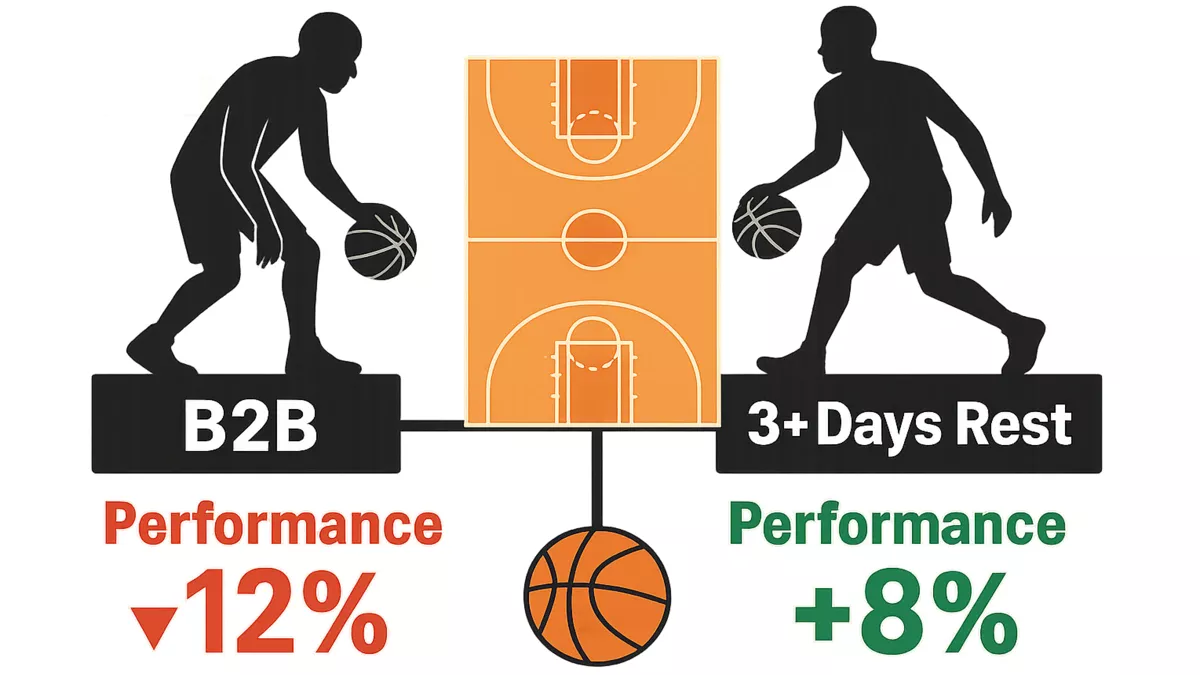
Rest advantage creates measurable performance differences in NBA betting
The specific rest combinations matter. A rested home favorite against a road team on a back-to-back is one of the strongest systematic bets in sports. The line often doesn’t move enough to fully account for the rest disparity because books are worried about taking too much liability on one side. This creates a persistent inefficiency that sharp bettors exploit relentlessly.
Late-season dynamics create massive strategy shifts that casual bettors ignore. Teams locked into playoff seeding start resting stars. Teams out of playoff contention begin tanking for draft positioning. From mid-March through the end of the regular season, you need to track playoff scenarios and identify which teams are actively trying to lose. Betting against tanking teams is often value even at inflated lines because they’re genuinely not trying to win.
The problem is that books adjust for tanking, so you can’t just blindly bet against bad teams. You need to identify the specific games where tanking teams face opponents who need wins for playoff positioning. The motivated team is usually underpriced because the public sees a good team favored over a bad team and doesn’t realize the bad team is actively trying to lose while the good team is desperate for a win.
Pace is critical for totals betting in NBA. Fast-paced teams push numbers higher, slow-paced teams grind possessions and keep scores lower. But more importantly, pace mismatches create predictable total patterns. When a fast team plays a slow team, the total is harder to predict because you’re averaging two different styles. Often these games go under because the slow team successfully slows the game down more than the fast team speeds it up. Finding these pace mismatch unders is a profitable niche.
Three-point variance makes NBA betting more random than football or baseball. A team shooting 30% from three one night and 45% the next is normal variance, but it swings the outcome dramatically. This is why NBA bettors need larger edges than football bettors the variance is higher, so your edge needs to be bigger to overcome the randomness. Many sharp bettors won’t touch NBA spreads and focus entirely on totals or player props where variance is slightly more manageable.
Live betting is more valuable in NBA than any other major sport. Basketball is high-scoring with constant lead changes. A team down 15 in the first quarter often comes back. The live lines adjust dramatically to temporary situations that don’t actually predict final outcomes. If you’re watching games and can identify when live odds are overreacting to short-term swings, NBA live betting offers consistent value opportunities.
Playoff basketball is completely different from regular season basketball. Pace slows significantly. Star players matter more. Home court advantage increases. Coaching matters more. Role players shrink under pressure. The systematic edges that work in regular season rest, tanking, pace mostly disappear. Playoff betting requires completely different analysis focused on matchups, coaching, and star power rather than regular season metrics.
MLB Betting Strategy
Baseball betting is fundamentally different from football and basketball because of sample size and pitcher dependence. With 162 games per season, variance smooths out much faster than in sports with 17 or 82 games. Teams closer to their true talent level over time. But individual games are dominated by starting pitcher matchups to a degree that doesn’t exist in other team sports.
Starting pitchers determine approximately 70% of a game’s outcome, which means handicapping baseball is mostly about handicapping pitcher matchups. The best teams with their fifth starter going are worse bets than mediocre teams with their ace. You need to track pitcher stats, recent performance, historical splits against the opponent, and how different pitchers perform in different ballparks. The team quality matters, but the pitcher matchup matters more.

Starting pitchers determine approximately 70% of MLB game outcomes
The challenge is that everyone knows pitchers matter, so this information is already priced in. Where value emerges is in identifying when the market is overvaluing or undervaluing specific pitchers. A pitcher who’s been getting hit hard but getting lucky on balls in play might be overvalued. A pitcher with great underlying metrics who’s been unlucky might be undervalued. Advanced stats like FIP, xFIP, and BABIP help identify these pricing inefficiencies.
Run lines are different from spreads in other sports because the standard is 1.5 runs. Favorites at -1.5 are typically plus money, underdogs at +1.5 are typically minus money. This creates interesting dynamics where betting the underdog at +1.5 at -150 can be better value than betting them moneyline at +130 because you’re buying insurance against one-run losses. Understanding when run lines offer better value than moneylines is crucial for MLB betting strategy.
First five innings betting removes late-game bullpen variance from the equation. You’re betting purely on the starting pitchers and early lineups. This reduces randomness and makes handicapping more straightforward. Many sharp baseball bettors exclusively bet F5 because it’s easier to project than full games where bullpen quality and leverage situations create additional variance.
Weather has massive impact on baseball totals in ways that don’t exist in other sports. Wind blowing out at Wrigley Field can add multiple runs to the total. Wind blowing in can suppress scoring significantly. Temperature affects ball flight warmer weather means balls carry farther, which favors hitters. Day games with shadows in certain innings create problems for hitters seeing the ball. Weather analysis is mandatory for serious baseball betting, especially totals.
The 162-game grind creates exploitable scheduling spots. Teams playing their eighth game in seven days in three different cities are legitimately tired. Bullpens get depleted during extra-inning games or when starters get knocked out early. West coast teams traveling east for early games show measurable performance declines. These scheduling spots aren’t as powerful as NBA rest advantages but they’re real and the lines don’t always adjust appropriately.
Umpires matter more than most bettors realize. Some umps have large strike zones, which favors pitchers and unders. Some have tight zones, which favors hitters and overs. Some are consistent, some are erratic. Tracking umpire tendencies and checking who’s behind the plate before betting totals is an edge that requires minimal effort but provides real value over time.
Soccer and Tennis Betting Strategies
Soccer betting requires completely different thinking because of three-way markets. You’re not betting spread or moneyline, you’re betting home win, away win, or draw. The draw probability fundamentally changes the mathematics and strategy compared to American sports with two-way markets.
Draw probability varies based on league quality and team styles. Lower-scoring leagues have higher draw rates. Defensive-minded teams draw more often. Matches between evenly-matched teams draw more frequently than mismatches. Understanding draw probability in different contexts is essential for soccer betting. You can’t just ignore the draw and bet home or away the draw price affects the value of the other outcomes.
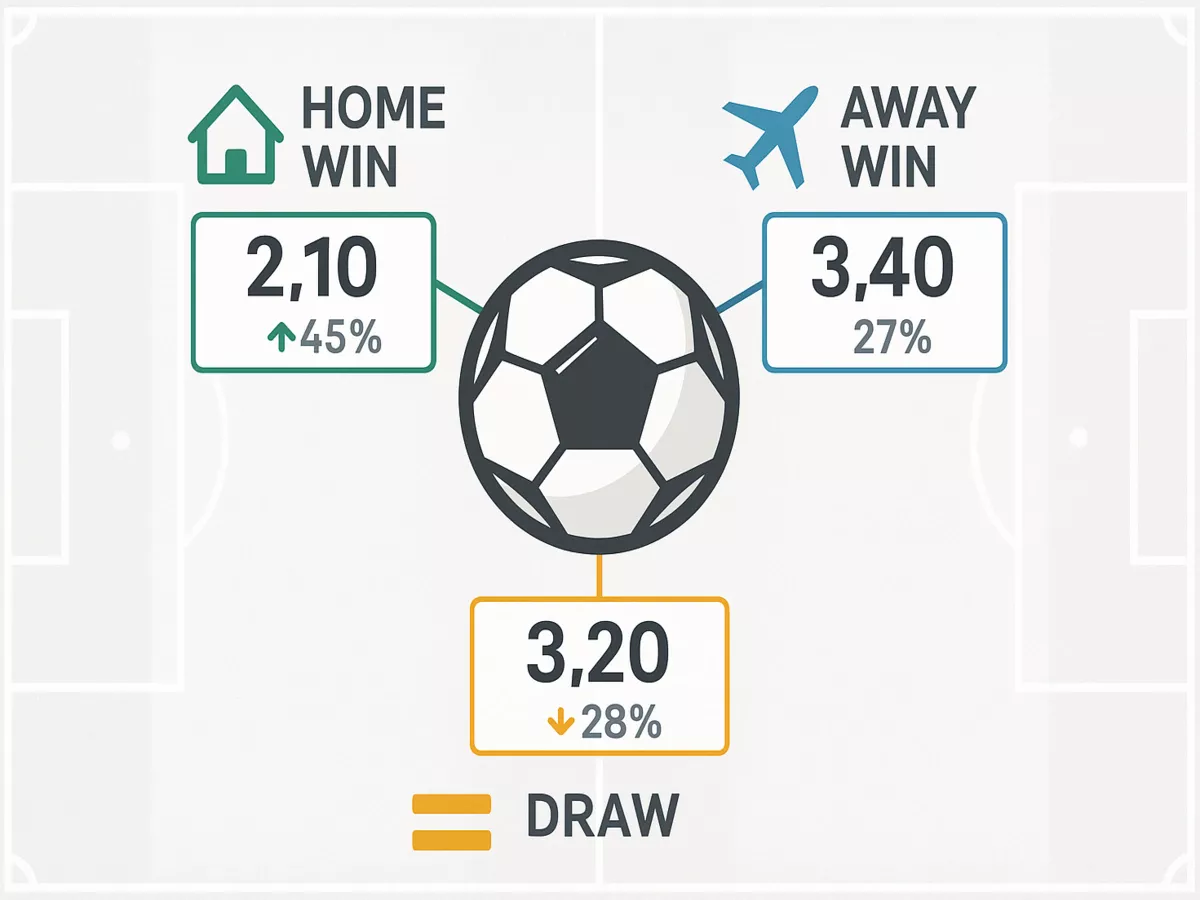
Three-way markets in soccer betting require different strategy than two-way American sports
Expected goals models have revolutionized soccer betting. xG measures shot quality and predicts future performance better than actual goals scored. A team with high xG but low actual goals is likely to regress positively toward their xG. A team outperforming their xG is likely to regress negatively. Using xG to identify value opportunities where the market hasn’t fully adjusted to underlying performance metrics is one of the sharpest edges in soccer betting.
Motivation disparities create huge edges in soccer, especially in Europe where teams compete in multiple competitions simultaneously. A team focused on Champions League might not care about a league match that doesn’t affect their standing. A team fighting relegation is maximally motivated. Cup matches where one team is several divisions higher but not taking it seriously create upset opportunities. Reading motivational situations correctly is more valuable in soccer than in American sports.
Asian handicaps eliminate the draw by giving one team a head start, which creates two-way betting markets that American bettors find more comfortable. If you’re betting Manchester City -1.5 Asian handicap, they need to win by two or more. If they win by one, you lose. This is similar to run lines in baseball. Asian handicaps often offer better value than three-way markets because the pricing is different.
Tennis betting is pure individual matchup with no team dynamics complicating analysis. Surface is critical clay, grass, and hard court specialists exist. Some players perform vastly better on one surface than others. A player dominant on clay might be mediocre on grass. Checking head-to-head records on the specific surface is mandatory before betting tennis matchups.
Recent form matters more in tennis than team sports because there’s no lineup to absorb individual poor performance. A player coming off a three-tournament winning streak is genuinely hot. A player returning from injury might not be at full fitness for weeks. Form and fitness analysis is more predictive in tennis than most sports because the outcome depends entirely on two individuals.
Live betting is extremely valuable in tennis because momentum swings are dramatic and the odds overreact. A player down a set and a break might still be the better player who recovers and wins. The live odds assume the current score is more predictive than it actually is. If you’re watching matches and can identify when better players are temporarily down but not actually playing worse, live betting tennis offers consistent value.
Sport-Specific Strategies: Summary and How to Apply These to Your Bets
Every sport requires its own strategic approach tailored to what actually drives outcomes in that specific market. NFL is about key numbers and situational spots. NBA is about rest and schedule analysis. MLB is about pitchers and sample size. Soccer is about draws and motivation. Tennis is about surface and individual form. Treating them identically is strategic malpractice that costs money.
The common mistake is expanding from one sport where you’re profitable into others without adjusting your approach. Your NFL strategy won’t work for NBA. Your baseball handicapping won’t transfer to soccer. You need to either develop sport-specific expertise through focused study and tracking results, or stick to the sports where you’ve proven you have an edge.
Specialization beats generalization in sports betting. The bettor who focuses exclusively on NFL and becomes expert in key numbers, situational spots, and line movement will beat the bettor who dabbles in NFL, NBA, MLB, NHL, and soccer while developing deep expertise in none of them. Depth beats breadth because the markets are efficient enough that shallow knowledge doesn’t create edges.
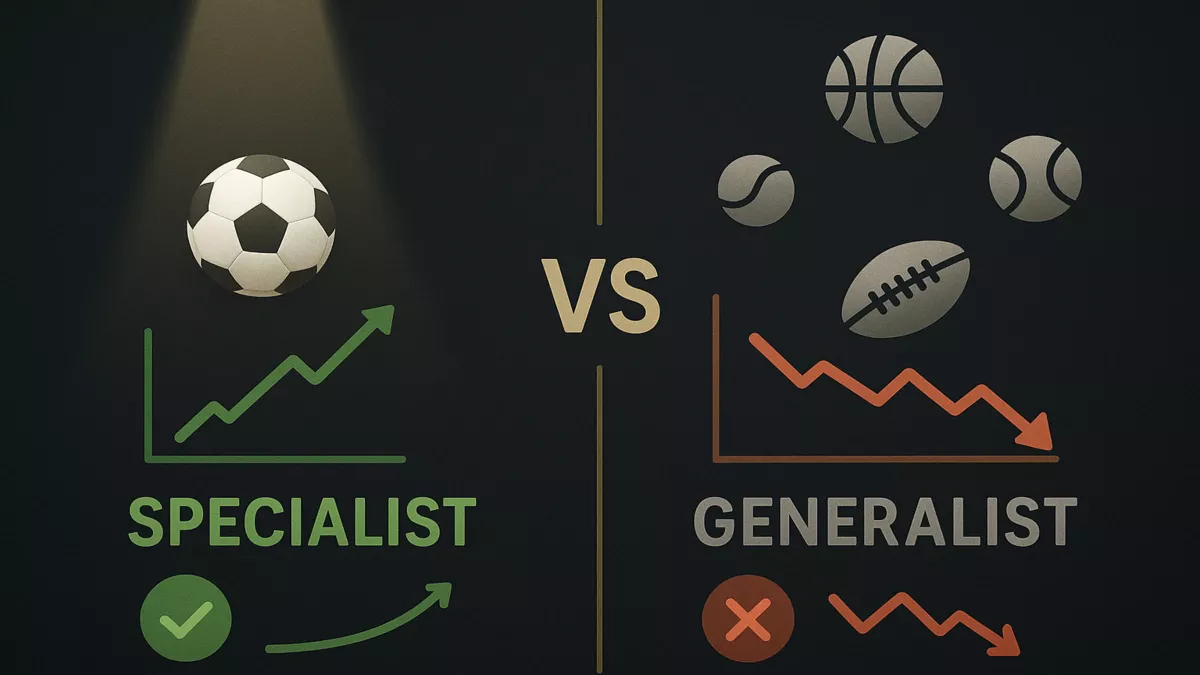
Specialization in one or two sports consistently outperforms generalization across many
If you’re currently betting multiple sports, honestly evaluate your results by sport. Are you profitable across the board or winning in one sport and losing in others? Most bettors have one or two sports where they’re genuinely sharp and several where they’re donating money. Identify your strength areas and either stop betting your weak areas entirely or commit to developing real sport-specific expertise before continuing.
The sports betting landscape is vast and each market has unique characteristics that create different opportunities. Understanding these differences and adjusting your strategy appropriately is the difference between spreading yourself thin and focusing your efforts where they actually produce profit. Pick your spots, specialize intelligently, and stop assuming that handicapping skill in one sport automatically transfers everywhere else.
See also: betstrategytips – tips and strategies for every sport.
See also: Value Betting Guide – find value across different sports.
